
Twenty-three farmers from across the Otago and Southland regions recently spent a day-and-a-half learning new business management and planning skills at the tenth anniversary edition of the Rabobank AgPathways Programme.
First run in 2016, the AgPathways Programme was developed by Rabobank’s Lower South Island Client Council with the aim of developing young farmers’ skills and contacts to advance their careers in the agricultural sector. The programme has taken place annually in locations across Otago and Southland in the years since, and close to 200 up-and-coming farmers have now taken part.
The landmark tenth anniversary edition was held on 13 and 14 May in Gore and featured a celebratory dinner attended by several former Rabobank Client Council members who were influential in establishing the programme a decade earlier.
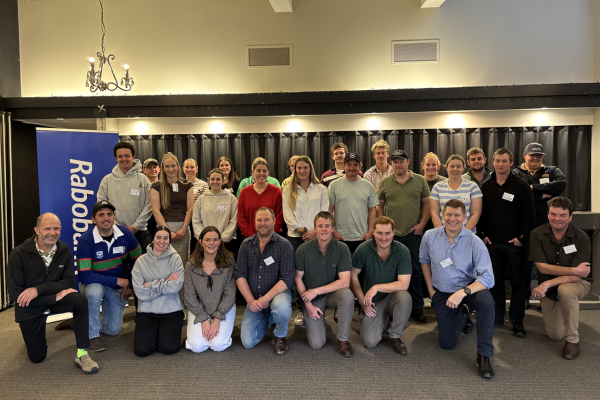
Lower South Island 2026 AgPathways participants
The ongoing success of AgPathways in the Lower South Island has prompted Rabobank’s Client Councils in the Upper South Island and Lower North Island to replicate the programme in their areas and, across recent years, events have taken place in several other regions around New Zealand.
Rabobank Lower South Island Client Council Chair Craig Whiteside launched the latest programme and said it equips participants with a valuable set of tools to support their progress in agricultural careers.
“Across a day and a half, the 24 attendees heard from a variety of speakers covering a wide range of topics, including personality profiling, communication, farm succession planning and business strategy,” he said.
“The programme also featured a ‘war stories’ session, where two local farmers – who had attended previous AgPathways programmes – shared their personal experiences and explained how they’ve grown and adapted their farming businesses over time.
“I’m aware this ‘war stories’ segment has been a highlight at previous Lower South Island AgPathways events, and it proved just as popular here.
“These stories really resonated with the programme attendees as they provided valuable insights on the steps attendees need to take to advance their own careers.”
As a follow-up to the programme, Mr Whiteside said, attendees would get together again in July.
“As part of this get together, participants will present back to the group a business plan on what they want to achieve in the future,” he said.
“This follow-up event is an important part of the course as it forces participants to think about and write down their goals, as well as the actions they need to take to reach them.”
With the programme celebrating its tenth anniversary, Mr Whiteside said, it was appropriate to recognise the contribution of the past Client Council members who had been responsible for the programme’s development.
“A number of these Client Council members attended the programme dinner, and it was clear from my discussions with them they are very proud of the impact the programme has had over the last decade,” he said.
“The vast majority of AgPathways attendees have forged successful careers in the sector, and it’s very satisfying for the ex-councillors to see something they created still going strong a decade later.
“The programme has a really strong reputation across the Otago and Southland regions, and it’s well positioned to keep supporting and developing farmers for years to come.”