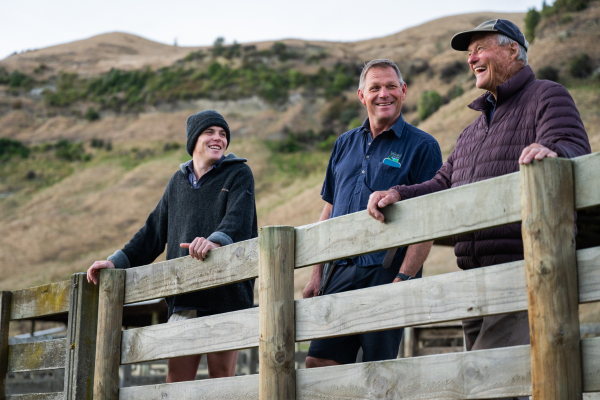
Succession Stories
Our Succession Stories explore how our clients have approached succession and navigated key business decisions, providing practical insight for farmers considering their own succession plans.

Following the success of our 2025 white paper Changing of the Guard and its 2026 sequel Succession 2050, which explored the opportunities and challenges of succession both on-farm and from an industry perspective, we have launched a Succession Stories series featuring real stories and anecdotes around this important topic.
These stories share firsthand accounts of how farmers navigated succession — from the journey to ownership and operational control, to the business and family considerations shaping their decisions. Together, they shine a light on the practical conversations that sit behind successful succession.
The series builds on momentum around these succession conversations and will be updated with more succession stories over the coming months.
"For 99% of farms, the succession process is the biggest single financial transaction they will ever go through".
- Rabobank New Zealand's 2025 'Changing of the guard' white paper
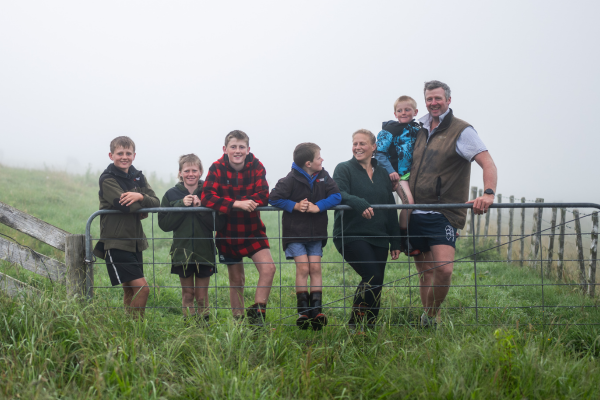
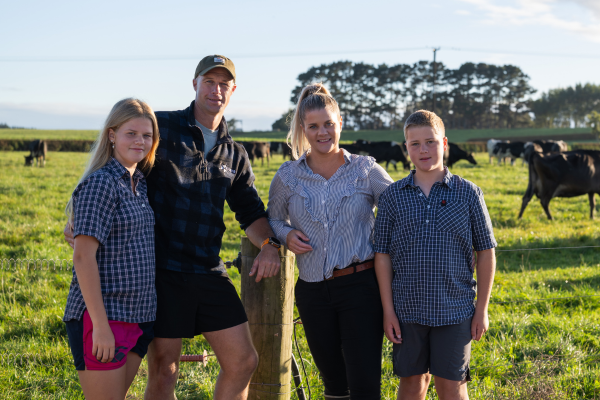
"Succession is not a moment in time – it’s a process that takes years of planning, conversation and adaptation. The traditional model of passing the farm to the next generation is under pressure, but there are new and innovative models emerging that can help families stay connected to their land.” Todd Charteris, CEO, Rabobank New Zealand
2025 White Paper - Changing of the guard
Across a number of years, our food and agribusiness clients have been asking us for more information to support them with their farm succession planning.
Off the back of this feedback, we developed a new white paper exploring ownership and succession in New Zealand farming, and we were very proud to launch this new white paper at the Primary Industries New Zealand Summit.
The new paper reveals that over the next 10-years, more than half of New Zealand farm and orchard owners – around 17,320 farmers – will reach the age of 65. Based on current average land values, this changing of the guard is likely to be New Zealand agriculture’s largest-ever intergenerational transfer of wealth, directly involving a current land value conservatively estimated at more than $150 billion of farming assets that will depend on a successful succession process.
The new Rabobank white paper is the fourth in a series exploring the opportunities and challenges faced by New Zealand’s primary industry. The paper looks at the emotional, environmental and economic aspects of farm succession, including the risks of disconnect between generations, and the realities of servicing debt. It also explores some of the new and innovative models emerging that can help families stay connected to their land.
Key findings:
- Only one in three farmers have a formal succession plan in place. A further 17% say they have discussed succession but nothing is documented, and the remaining 50% say they have neither discussed succession nor commenced a succession plan;
- Research also finds one-third of farmers intend to pass their farm to their children, yet 39% report having no children seriously interested in farming;
- The financial obstacles to farm ownership are not getting any smaller, but have plateaued in recent years;
- While the ideal of passing the family farm down from one generation to the next is under significant pressure, there are a number of new and innovative succession models being adopted to help farming families stay connected to their land; and
- Succession is a process, not a moment in time. Given there is no off-the-shelf solution for most families, succession takes time.