
New Zealand farmers and landowners will soon have a new opportunity to increase revenue as part of an integrated approach to land management, with potential benefits for both the local environment and the rural economy.
Rabobank, through Rabo Investments in the Netherlands, is entering into a new partnership with Nateva* – the largest local provider of actively managed, permanent indigenous forest restoration and a key wholesale client of the bank in New Zealand. The initiative was developed to allow local landowners to unlock the value of lower-producing land through the international voluntary carbon market, establishing a long-term income stream that is complementary to other on-farm activities.
The new partnership will enable opportunities for farmers to realise financial returns that have not been accessible until now, selling voluntary carbon credits to local and international organisations. These credits will be generated through afforestation on lower-producing farmland that is suitable for planting.
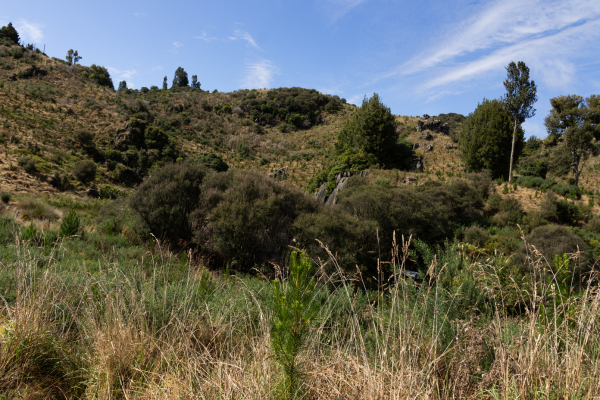
This will be achieved through the establishment and management of new forests, which use faster-growing exotic trees as a nurse crop to then enable the transition to a biodiverse indigenous environment over time. The transition is supported by a well-established active forest management programme, which speeds up the natural processes.
Rabobank’s Head of Innovation, Wholesale and Rural Roland van der Vorst said Rabobank and Nateva will form a partnership to work alongside local farmers on the forest management programme.
“The partnership aims to create opportunities for farmers looking to realise value from marginal parts of their land that until now have generated little or no revenue,” he said.
“Eligible farmers will enter a long-term lease with the partnership and in return will receive 50% of the value of voluntary carbon credits, net of operating costs, with the partnership receiving the remaining 50%.
“The partnership will help to support the long-term profitability of New Zealand farming businesses as well as delivering wider environmental and climate benefits through carbon sequestration and the development over time of indigenous forests.
“We’re really proud to open up this new opportunity for Kiwi farmers and landowners. Developing a partnership with a key wholesale client and tapping into its extensive experience establishing and managing transition forests in agriculture landscapes is an example of Rabobank’s innovative approach to investments in food system transitions.”
Nateva director Bruce Miller says the partnership will enable local farmers to unlock new, long-term value from their land, supported by local experts in active forest management.
“By creating a model designed to the highest international standards for voluntary carbon units, we are enabling local farmers to tap into a large and growing international market, while also making a contribution to the local environment,” Mr Miller said.
“At the same time, our active forest management approach, which includes the largest private pest management operation in New Zealand, creates jobs and investment in local regions.”
Under the partnership agreement, Nateva will provide the benefits of its established expertise in forest transition at scale, as well as the resources of a large and local interdisciplinary team, which includes ecologists, land managers and pest, plant and animal eradication professionals.
Rabobank New Zealand Country Banking General Manager Bruce Weir said the new partnership will provide farmers, with appropriate areas of land, another potential earning opportunity.
“This is an option for them to consider in terms of generating additional revenue opportunities alongside helping to reduce their on-farm emissions profile, enhance on-farm nature values, and build the overall resilience of their farming business,” he said.
Mr Weir said the partnership with Nateva aligns strongly with Rabobank New Zealand’s ambition to help its clients improve both the financial and non-financial performance of their operations.
“This partnership with Nateva to create a voluntary market offering for New Zealand farmers is another demonstration of how Rabobank New Zealand is working to develop solutions that improve both the financial and environmental performance of New Zealand farmers.”
The forest management programme will follow an established design process to meet international voluntary carbon credit standards, which will be independently audited and verified prior to the release of carbon credits.