
Posted on
04/05/2026James and Melissa Barbour farm in the South Waikato, where they own and operate a 196-hectare dairy farm at Wāotu with 440 cattle. The property produces around 215,000 kilograms of milk solids and includes areas of native bush, farm forestry and recently restored wetlands. It is their fourth season owning the farm, which they purchased in June 2022.
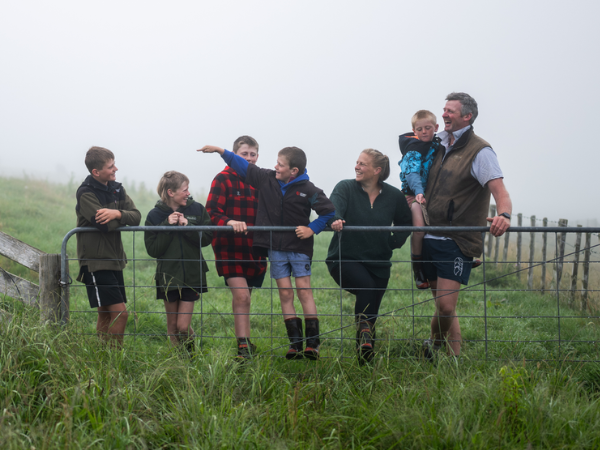
They live on the farm with their five sons, Ben 14, Josh 12, Willie 11, Tommie 7, and Luke 6. After 15 years sharemilking across Waikato and Taranaki, ownership marks a significant milestone, but one that was built gradually rather than reached in a single step.
From the outset, their pathway into ownership was shaped by the absence of family financial support. Although both are from farming families, their progress came through sharemilking, reinvestment, leasing land alongside sharemilking, and a willingness to move outside of their comfort zones when opportunities aligned with their longer-term goals.
Building capability through sharemilking
James and Melissa began sharemilking in their early twenties on a 170-cow farm at Te Poi. By today’s standards it was small, but it gave them responsibility early.
“It was affordable, and it was a great start,” James says. “You’re in charge of your own decisions, and you learn pretty quickly to be careful with money. Using those same principles that work on a small farm, and applying them to subsequent jobs was key.”
Over the next decade, they progressed through a series of 50:50 sharemilking roles in Waikato, gradually increasing cow numbers while deliberately consolidating at key points.
“It wasn’t always about pushing bigger,” Melissa says. “Sometimes it was about consolidating, getting on top of everything, and making sure we were ready before taking the next step.”
One of those roles proved especially formative. The farm was owned by Mrs Joan De Renzy, a landowner who took a close interest in how the business was run and took the couple under her wing as a mentor.
“She was someone you noticed,” Melissa says. “Even before the job came up, James had mentioned he’d like to work for her.”
Joan’s expectations went beyond production. She encouraged high standards, professionalism and pride in the workplace.
“She had really high standards,” James says. “Pride in the place, pride in the cows, pride in how the farm looked.”
One of her non-negotiables was that they enter the Dairy Industry Awards.
“She made it a condition,” Melissa says. “Without that push, we probably wouldn’t have done it.”
Winning the Waikato award reinforced the value of low-input systems and strong fundamentals.
“Grass was the main driver,” James says. “That focus was drilled into us there, and it’s stayed with us the whole way.”
Although Joan has since passed away, her influence remains.
“We still talk about things she used to say,” James says. “She had a big impact.”
Learning from mistakes
The Barbours are open about the fact that their progress was not linear.
“We made plenty of mistakes,” James says.
Some of the toughest lessons came during periods of low milk payouts.
“There were years where we were paying staff more than what we were taking home as a family,” Melissa says. “That really makes you stop and think.”
Those years sharpened their focus on cost control, debt reduction and resilience.
“You don’t always get it right first time,” James says. “But you knuckle down, learn what works for you and adjust your systems to help you reach your goals.”
Looking back, Melissa is clear those experiences shaped later decisions.
“If we hadn’t gone into those years in a strong financial position, we wouldn’t have been able to take the opportunities that came later.”
Flexibility, scale and people
As their farming business developed, James and Melissa became increasingly deliberate about how they managed both risk and labour.
Staff have always been central to that thinking. Today, the farm employs one full-time staff member, Liam Mitchell, now in his fourth season on the farm.
“Like all staff, Liam has an important role in our business,” James says. “When you hear about the trouble some farmers have retaining staff, we’re pretty proud of that.”
Retention, they say, comes from investing time and trust.
“If you’ve got someone young and keen, it’s 100% in your best interest to put the effort into them,” James says.
Alongside sharemilking, the Barbour’s have leased a 160-hectare drystock block at Piarere, near Matamata; for 11 years now a decision that proved pivotal.
We wanted more control over our replacement stock. Also, the ability to diversify our business with beef, and minimising wastage from the dairy herd,” James says.
The lease block allowed them to rear their heifer replacements, breed Angus cattle, and fatten beef cattle, reducing reliance on external grazing markets. “As herd owning sharemilking, we were always at the whim of the markets, and having the ability to grow and finish beef helped reduce the risk involved when payouts were low and cow prices slumped.
“That made a real difference.” Melissa says.
Over time, they built their dairy herd deliberately, treating stock as a long-term asset.
“Those cows were everything for us,” James says. “We knew one day they’d be what allowed us to buy land. I was pretty proud of the herd we had built up whilst sharemilking.”
Working towards ownership
By the time the Barbours stepped into a large-scale sharemilking role in Taranaki, milking around 1,200 cows across a split-calving system, they were managing a fairly complex operation and a large team.
“That job gave us confidence,” James says. “If we could do that well, farm ownership felt achievable, and we backed our processes.”
Even then, ownership was never assumed.
“Some people might have stayed there,” Melissa says. “For us, the large sharemilking job was always a step, not the end point.”
In June 2022, after 15 years sharemilking, they purchased their own farm in the South Waikato.
Affordability was central to the decision.
“We didn’t want to be forced into pushing every lever just to service debt,” Melissa says.
Instead, they chose a property that suited both their system and their family. “It doesn’t have to be perfect land,” James says. “It just has to work.”
Their move into ownership was supported by Rabobank, with expectations clearly understood on both sides. “There was trust there,” Melissa says. “But it came with responsibility.” That reinforced an approach they had followed for years.
A key focus for us is when we take on debt, we focus on paying it down,” James says. “That’s always been our priority, and we feel the bank has looked favourably upon that.”
Family and the long view
Family considerations have shaped decisions at every stage. James and Melissa started a family young, raising five sons alongside the demands of sharemilking and ownership.
“There are memories that really stick,” James says. “I remember Melissa feeding calves with a kid on her back and a couple others running round in the calf shed. You look back and smile.”
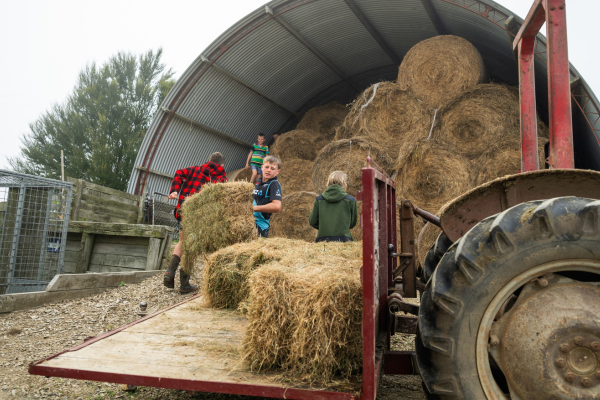
The boys help out on farm regularly, and are encouraged to understand the value of effort, without pressure about their future paths.
“There’s no expectation they’ll farm,” James says. “But we also want to encourage and inspire them and highlight that farming can be a very rewarding and special career. They see what goes into it, and we expect them to work hard.”
Ownership has allowed the family to settle after years of moving.
“After shifting around so much, it’s been really nice to settle,” Melissa says. “To know we’re here for the long term.”
With that stability has come the ability to plan beyond the next season, from environmental projects to farm improvements, there is always something on the go.
Farming is our way of life,” James says. “And being able to do it as a family has been one of the best parts of the journey.”
Key lessons from James and Melissa’s experience
Build capability before committing to ownership
15 years of sharemilking across different systems and regions provided the operational, financial and people-management experience needed to step into ownership at scale.
Use structure and diversification to manage risk
Leasing a drystock property alongside sharemilking improved control over young stock, reduced exposure to external markets, and supported cashflow during lower payout periods.
Treat discipline and trust as long-term assets
A consistent focus on cost control, debt reduction and delivering on commitments helped build the confidence needed to take opportunities when they arose. Doing what you say will do - Integrity.