
Posted on
25/09/2026When the topic of succession comes up at his workshops, Lawrence Field often hears a familiar answer.
Most farming families know they need to think about it. Many have been meaning to tackle it for years but just haven’t quite got around to it.
“Ask them when they’re planning to step back from the day-to-day running of the business and it’s often five years,” Lawrence says.
“The interesting thing is that if you ask them again three years later, it’s still five years. It’s a rolling five years.”
Over the past several years, Lawrence has facilitated succession workshops across New Zealand through a Rabobank Client Council initiative designed to help farming families navigate one of the biggest transitions they will face.
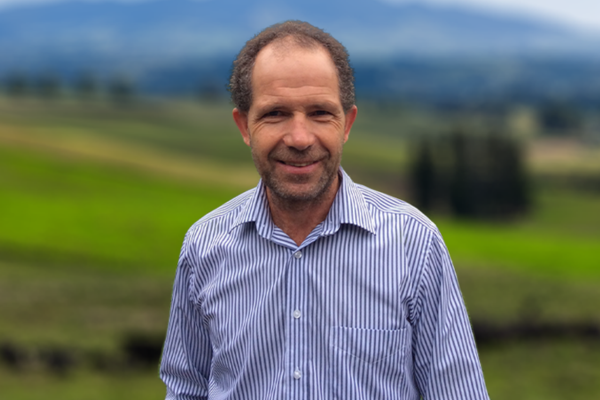
The workshops have attracted hundreds of participants, from multi-generational farming families looking at ownership transitions to first-generation farmers considering what comes next for the businesses they have built themselves.
Looking beyond the numbers
Lawrence Field has spent years working with farming families to build their understanding of business performance and
financial decision-making. Through Rabobank’s financial literacy workshops, he has helped farmers better understand the numbers behind their businesses. But as those conversations continued, another theme kept surfacing.
“I got a real sense that there were lots of people struggling with succession,” he says. “They were struggling with the ‘what next?’ question.”
Some were uncertain whether the next generation wanted to farm. Others were trying to balance fairness between siblings or work through ownership arrangements that had never been fully resolved. While every situation was different, the challenge was often the same: how to begin a conversation about the future.
Many participants arrived expecting discussions about ownership structures, trusts or legal arrangements. Instead, Lawrence takes them back a step.
“We talk about strategy before structure, or feelings before facts,” he says.
“Before families can decide how a transition might happen, they first need to understand what they’re trying to achieve.”
More than retirement
One of the first things many participants discover is that succession isn’t really about ownership structures or legal documents. It starts with a more personal question: what does an ideal outcome actually look like?
“I’m always a bit wary mentioning the ‘R’ word,” Lawrence says. “I had somebody say straight away, ‘When you retire, you die.’”
The comment usually gets a laugh, but it reflects a reality Lawrence sees regularly. For many farmers, stepping back is not just a business decision, it’s a question of identity.
Rather than focusing immediately on ownership, the workshop’s discovery phase encourages participants to think about the future more broadly. Where do they want to live? How much income will they need when they are no longer farming full-time? What role do they still want to play in the business? And what would a successful transition of responsibilities look like?
For many couples, they are questions that have never been properly discussed.
Many farmers have spent decades building businesses, raising families and investing their identity in the farm. The idea of stepping back can feel less like a financial decision and more like a loss of purpose.
One of the discussions Lawrence returns to regularly is the idea that succession does not have to be an all-or-nothing event.
At a workshop in Northern Southland, several families arrived with children who were still relatively young and had not yet decided whether farming would be part of their future. Like many parents, they were reluctant to pressure them into a decision, but that uncertainty had also made it difficult to think about their own next chapter.
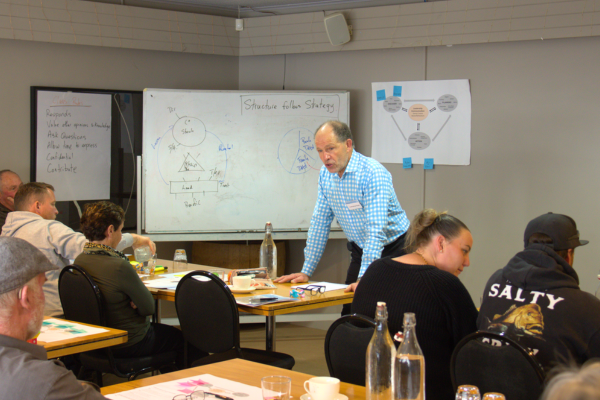
As the discussion unfolded, Lawrence could see perspectives beginning to shift.
Rather than waiting for the next generation to provide all the answers, families started considering what the next five, 10 or even 15 years might look like for themselves. If they eventually wanted to step back from the physical demands of running the farm, what options might help create that flexibility? Could operational responsibilities gradually be handed to staff or managers while keeping future opportunities open for family members?
For some participants, it was the first time they had separated their own plans from decisions their children had not yet made.
“It helped them think about what the next stage of their life might look like,” Lawrence says. “They didn’t have to put everything on hold while they waited."
Lawrence often encourages couples to take time away from the farm to work through these questions together.
For many people, it’s the first time they’ve properly discussed where they might live, what their income needs could be, or what a transition of roles and responsibilities could look like. It’s strategic planning for the next chapter of their lives.
Strategy before structure
A recurring theme across the workshops is the importance of communication.
The families that are good at communicating are just so much further ahead.
The workshop is designed to help families understand what they want to achieve before jumping to solutions. Once there is alignment around goals, conversations about ownership structures and implementation tend to become much easier.
Lawrence has seen that play out repeatedly.
One family arrived with three generations represented in the room. Grandparents, parents and adult children all took part in the discussions together. They did not have all the answers, but everyone was hearing the same information, asking the same questions and working towards the same future. For Lawrence, it was one of the clearest examples of a family building a succession pathway collectively rather than leaving assumptions unspoken.
In another workshop, a market gardening family shared a different story. The middle generation had already passed many responsibilities on to the next generation, including one son who joked that he now worked for his daughter-in-law. Far from resisting the change, he embraced it.
For Lawrence, it was a powerful example of how succession can evolve when people are willing to redefine their roles within the business, but he concedes that not every family arrives in such a strong position.
Sometimes the biggest value comes from recognising where support is needed.
Lawrence recalls one workshop where tensions between a father and daughter involved in the same farming business had become difficult to ignore. By the end of the day, the father acknowledged there could be real value in bringing an independent facilitator into future family discussions.
This may seem a small step, but to the family involved, it represented progress that had previously seemed unlikely.
Creating momentum
For Lawrence, success is rarely measured by whether a family leaves with a completed succession plan. More often, it is found in a shift of perspective.
He recalls one farmer at a Northland workshop who arrived visibly sceptical about spending a day discussing succession.
As introductions went around the room, he made it clear he was busy, wasn’t convinced the workshop would be particularly useful, and expected he would probably leave before the end of the session.
By the final discussion, his view had changed.
He said he wished all of his family had attended. What started as something he felt he probably didn’t have time for had become something he could see real value in
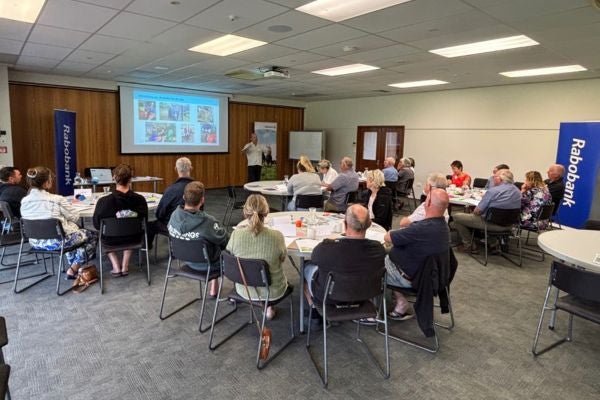
It’s a pattern Lawrence sees regularly. Families often arrive looking for answers about ownership structures, legal arrangements or how a transition might work in practice. What many discover is that the first step is often much simpler, and more challenging, than that.
“It’s about getting people talking,” he says.
Some families have returned to later workshops with additional siblings or family members, recognising the value of hearing the same information together and building a shared understanding of the opportunities and challenges ahead. Others have used the workshop as a starting point for conversations that had been postponed for years.
What those families have in common is not that they leave with all the answers. Rather, they have created momentum.
Many farming families already know the conversations they need to have. The challenge is finding the time, creating the space and establishing an environment where those conversations can happen constructively. Once that process begins, decisions that once felt overwhelming often become much more manageable.
Building for the future
Succession planning today is taking place in a very different environment from the one many current farm owners inherited.
Businesses are often larger and more complex, and expected to deliver across a broader range of objectives than they were a generation ago. The skills required to lead those businesses continue to evolve, and traditional assumptions about who will eventually take over are increasingly being challenged.
Lawrence says understanding the financial health of the business remains a critical part of the process. Questions around profitability, cash surplus, equity and borrowing capacity help determine what options are available, while ensuring the wider family understands those numbers can help bring everyone along on the journey.
Lawrence often reminds workshop participants that birth order or gender should not determine who is best placed to lead a business in the future.
Instead, the focus should be on capability, interest and creating the conditions for long-term success.
While every family’s path will be different, the most successful transitions rarely happen by accident.
They begin with honest conversations, clear communication and a willingness to think beyond the immediate demands of the season.
“This is so important, but it’s not urgent,” Lawrence says. “That’s the risk. It gets pushed down the road and doesn’t get addressed.”
For the families making the greatest progress, the breakthrough is often not a legal structure or a financial solution. It’s simply deciding to start the conversation.
Lessons from Lawrence's experience
Start with people before paperwork
The most effective succession plans begin with conversations about future roles, goals and lifestyles before moving on to structures and legal arrangements.
Good communication creates more options
Families that can discuss expectations openly are often better equipped to navigate ownership transitions and difficult decisions.
Know your numbers
A clear understanding of profit, cash surplus, equity and ability to support more debt is essential. When this understanding is shared across the wider family, it helps everyone engage more meaningfully in the process.
Succession is a process, not an event
Responsibility and leadership can be transferred gradually, creating opportunities for both generations to adapt over time.
Don’t wait for urgency to drive action
Because succession rarely feels urgent, many families delay it. Starting early creates more flexibility and often leads to better outcomes.