
Posted on
22/09/2026To anticipate the extent of change in the future, it’s useful to think about the recent rate of change. Between the year 2000 and now, what has really shifted? What was important then, and how has that changed in terms of the future we imagined for a sustainable food and agriculture system?
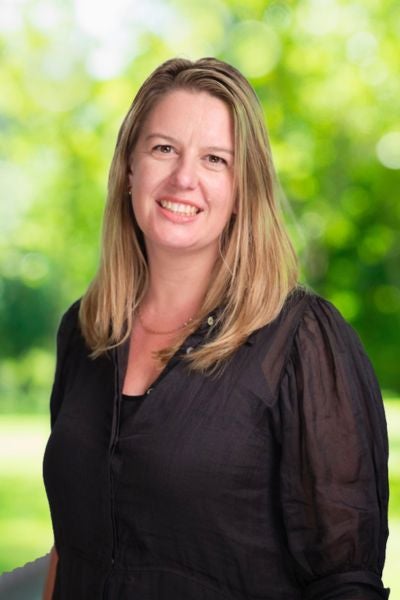
Alyce Butler
Strategy Partner at Deloitte New Zealand
Alyce Butler is a Strategy Partner at Deloitte New Zealand, focused on the food and agriculture sector. She grew up on a dairy farm in Taranaki and today brings extensive experience in developing strategy, facilitating strategic partnerships and leading significant change programmes in multiple global food and agriculture organisations.
This includes her previous role as General Manager of Strategy and Commercial Partnerships at DairyNZ and, prior to that, her position as a Director within Deloitte’s Future of Food Centre of Excellence in Amsterdam.
We’ve come a long way in understanding the scale of the issue to be solved and the fundamentals of what it means to be sustainable. But to be honest, we’re seeing this vision become more ‘boring’ over time.
The question we’re facing now is how do we make sure there is a secure, long-term food source to feed our population?
For example, when the Ukraine crisis hit and its strategic breadbasket was disrupted, the narrative was not “we need sustainable food”. It was “we need enough food, in the right places, at the right price” not just in Ukraine but all over the world. The same is true today with the disruption in the Gulf.
A big part of sustainable food production today is the ability to respond to shocks, whether related to climate, geopolitical or economic factors. I’ve seen huge global companies suddenly unable to meet basic, long-term supply commitments because of unprecedented weather events and growing conditions that affect all growing regions at the same time.
Some things never change. Whether it’s now or 2050, we’ll need to focus on achieving sustainability objectives and, in parallel, achieve broader access, affordability, productivity, nutrition and resilience objectives at pace, because there’s no other option.
We only have one planet and one set of planetary boundaries, and we’re already exceeding many of them. The opportunity we have now is to rethink how we achieve this in New Zealand.
Transparency through technology
By 2050, my hope is that farmers will be seen as the heroes they are, producing sustainable, nutritious food and creating economic opportunities for our people and our country.
In this, our pastoral system is our greatest competitive strength. We need to maximise it by using technology for a risk-based approach, not a one-size-fits-all sustainability approach. The outcome would be maximising productive value where we can and protecting and improving the environment where it is needed.
Our pastoral system is our greatest competitive strength. We need to maximise it by using technology for a risk-based approach
I’m fascinated by any technology that can triangulate environmental, production and financial goals. For example, wearables such as those created by New Zealand tech company Halter are a step towards achieving this as part of wider farm management systems. If integrated well with other technologies and good farm management practices, they present a strong opportunity to significantly improve productivity, sustainability, transparency and profitability.
Using technology to verify what has happened in the value chain is important. For example, in Europe, Deloitte worked on a project to set up video content analytics in slaughterhouses to automatically detect and report any deviations from humane slaughter. The project was proactively commissioned by a global meat company, with the definition of “good” set by an animal welfare NGO and based on market expectations.
Speeding up adoption
It’s less relevant which technologies will emerge. What’s more relevant is whether our people and our systems can quickly and effectively stack them together and take them up to realise the opportunity.
Food and agriculture has been slow to reap the benefits of the digital revolution. The most interesting innovations we’re seeing today have been around for years in other industries. We need to speed this up in the next wave of development, especially with AI.
The new generation of farmers coming through as part of sector-wide succession are increasingly tech savvy, knowledge-seeking, curious and more environmentally aware. They grew up in a digital age and know how to get information. It’s a huge opportunity to create a wave of improvement and not just follow what our parents did over the last 25 years.
We have lots of organisations and people who are pretty good at many things. We need more who are excellent at a few things.
Incentives are starting to come through for farmers on sustainability metrics. Banks overlay profitability potential with climate change adaptation and greenhouse gas profiles. Lending and processor incentives are starting to drive land price changes.
By using these levers in the broader food system, we will increasingly make food in the right places in the right way to maximise that value. This will mean intensifying production in some places with fewer natural restrictions while also using the technology at our fingertips to have mitigations in place where they are needed.
There is huge value in making more data-driven decisions on the farm to maximise production within a better environmental footprint.
Sometimes compliance technologies can be used like a Trojan horse to get farmers to adopt technologies and use them for other, more value-added purposes. The trick is doing it in a way that doesn’t leave farmers feeling they’re not in control of their own enterprise.
They’re entrepreneurial people. It needs to be their choice, obviously with a regulatory baseline, to pursue sustainability initiatives and decide where they want to sell their produce.
How do we create the technologies and the right incentives while still making farmers love what they do, and be successful in doing it?
Without this kind of farmer-centric approach, farmers wanting to be farmers, and other people wanting to be farmers, our entire food system falls down.
Beyond the jack of all trades
Strategic focus remains an Achilles heel for the New Zealand food system. Compared to Europe, we don’t claim our space and then connect with others.
We have lots of organisations and people who are pretty good at many things. We need more who are excellent at a few things. We need those with specialisms to constantly get better, in line with the international pace of change, and then connect more efficiently with each other so that the entire system improves.
If everyone is trying to do everything, we’re not naturally going to evolve at the pace global technology advancements potentially enable.
Industry-good (farmer) organisations can also have an essential role. Having a collective voice ensures farmers are at the table in critical conversations about the future. The six-year levy cycle is a good one relative to our political and commercial cycles.
To take advantage of those cycles, any industry-good effort has to be future-focused, evidence-based and able to connect with the rest of the ecosystem, government, industry and science, to drive change.
We must never walk alone.
Want the full insights?
Download our Succession 2050: Gearing up for New Zealand's food and agri future white paper today.