
Posted on
13/11/2026For Megan Templeton farm succession has never been only about transferring land, debt or ownership. It has also been about family history, identity, fairness and creating room for the next generation to step up and lead.
Megan and her husband Vaughan began the formal succession process a decade ago after farming together on the coast near Riverton in Southland since 1988.
They brought their sons Luke and Pete into two dairy farming operations built from a property that had already changed a lot over the generations.
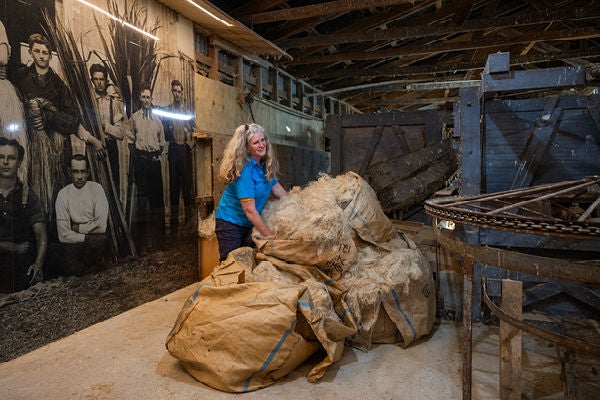
The farm had moved from flax milling to sheep and beef, and then to dairy. That history showed that stewardship did not mean keeping everything the same for ever.
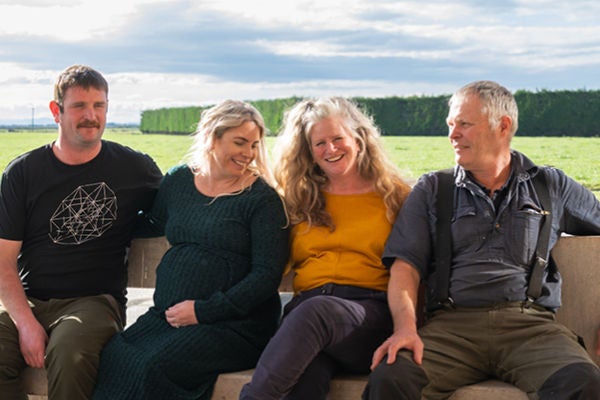
"Other generations have changed what they were doing and what they needed to do," Megan says. "This helps the next generation to see they can take it from where it is, to anywhere they want to go."
With both sons now owning their farms, and Megan and Vaughan getting ready to move into a new home in Riverton, the transition is on the home straight.
Megan's experience shows that positive succession needs more than a sound commercial structure. It relies on early conversations, genuine listening and recognising the, often under-stated, role women play in holding the family and the business together.
The role behind the numbers
Megan came from a farming background, but when she and Vaughan moved onto the farm in 1988 she was also a new mother. Their first son, Luke, was only about 10 weeks old.
Within a month, she was learning how to pay bills, sort out the GST and manage a lot of the admin. This knowledge really came into its own as the farm grew and the family began thinking about succession.
"The women I know are the ones who have paid all the bills, reconciled the bank statements, coded the GST and arranged everything for the accountant," Megan says. "They generally also know the cash flow and understand the farm finances."
That knowledge equipped Megan with an instinctive feel for whether the business could sustain bringing in another family, or in their case two, and the additional borrowing required with that.
It also shaped how she saw her role in succession. Vaughan and Megan had been thinking about the future. The formal transition took around a decade, but the foundations were laid earlier by building a profitable business, understanding its capacity and being open to change.
"You can't pass anything on if it's not making a profit," she says.
Megan believes women can bring a unique combination of commercial knowledge and emotional awareness to freighted discussions about succession. They may have a deep understanding of what drives the farming business, while also noticing when fairness is becoming an issue, or when a difficult point needs to be revisited after the meeting.
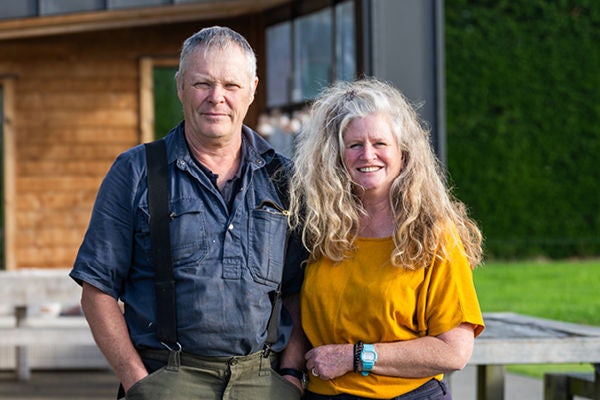
"You can't pass anything on if it's not making a profit,"
Creating the right space
The formal conversation began when Vaughan said he had timed out on the family’s unwritten rule of ‘holding the chequebook’ for 25 years and it was time to create an opportunity for somebody else.
Luke had trained as a mechanical engineer and was working as a project manager. Pete was still at Lincoln University. Megan and Vaughan had always believed there would be an opportunity for their sons, but the timing still surprised the boys.
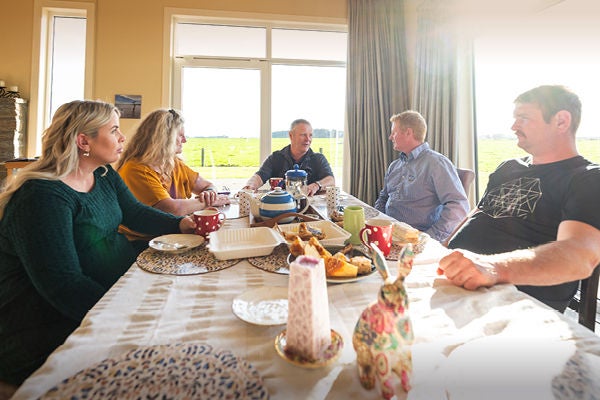
Before bringing everyone together, Megan and Vaughan talked with their bank and succession adviser. The first family meeting was held at the Rabobank office in Alexandra, away from the farm and the family kitchen table.
For Megan, the neutral setting was key. At home, she could slip into the role of host, making tea or trying to smooth things over when conversations became difficult. In a neutral room, the family could meet on more equal terms and focus on the issues in front of them.
"It changes the balance of power," she says. "Succession is a big business decision, but it is emotional because you are doing it with people you are extremely connected to and have history with, good and bad."
The facilitator helped keep things on track. Megan remembers being told that everybody would speak in turn. Vaughan and Megan described the history, then the sons explained where they were and what they expected over the next five or 10 years.
"In a family of driven personalities, a big thing for us all was learning to stay quiet," Megan says.
Pete, as the youngest, could sometimes be talked over. Megan saw part of her role as making sure everyone had the opportunity to speak, without speaking for them.
The combined elements of neutral venue, independent facilitation and trusted advice gave the family a structure for conversations that carried financial and emotional weight.
"Succession is a big business decision, but it is emotional because you are doing it with people you are extremely connected to and have history with, good and bad."
Separating the farm from the future
One of the hardest parts of succession was working out what Megan and Vaughan wanted for themselves.
When their succession advisor initially asked them to write down their 10-year goals, their first list was entirely about the farm. He sent them away to develop personal goals instead.
"We found that harder to do," Megan says. "You might each have an idea, but you are not always on the same page."
For some couples, one partner may be ready to leave the farm while the other is not. Others have spent so long building the business that they have no clear answer about how they will fill their lives after stepping back.
Vaughan could imagine building in Riverton and retiring, while Megan was not ready to stop farming. Their answer was to buy a support block and run a separate business alongside Luke and Pete, rearing calves on contract for the two farms.
This gave Megan a gradual transition. It allowed her to remain connected to farming without standing in the way of the next generation from taking control of the main operations.
Years later, after a difficult wet spring and the realisation that they no longer wanted the hardest physical work, Megan and Vaughan sold the support block to Luke and his wife Jen.
Part of Megan and Vaughan’s income now comes from shares in equity farms in Southland and West Otago. They have developed other interests. Vaughan has governance roles, is involved with the Flax Mill Museum and has returned to golf. Megan has joined Community Trust Southland. Together, they play in a family rock-and-roll band – ‘Soundcheck’.
These activities have provided purpose, income and identity beyond day-to-day farming, and make it easier to let go, rather than remain in the business due to a lack of other pastimes.
Welcoming the next generation of women
The succession process was well under way before Luke and Pete met their partners, Jen and Emma. For Megan, bringing the daughters-in-law into the picture has been both a joy and a reminder of her own experience entering an established farming family.
"It can be intimidating to come into a family situation where everyone else knows where they are at," she says. "They can feel like they are coming into a powerhouse and they don't know where they fit."
Megan believes the answer is to welcome partners into the conversation and allow their involvement to grow in a way that works for them. First Vaughan, and shortly Megan will step aside as trustees of the sons’ family Trusts, making room for the new partners to step up.
Fairness without forcing sameness
One big call by Megan and Vaughan during the transition was to divide the assets between two separate farms rather than expecting the brothers to remain in partnership as they bought in.
Luke had led the project to build a second cowshed, races and infrastructure, so he took the farm with the new shed and the established homestead. Pete received the older shed and more modest housing, but with a stronger balance of land types across summer and winter conditions.
"We said, you don't have a fight with each other about this. We are calling it, and you can have your fight with us," Megan says.
The division was close in area, but fairness did not remain perfectly even at every point.
When a neighbouring block became available in 2020, the senior Templetons helped fund it to add to Pete’s operation. That gave him an advantage for a while until the later sale of the support block helped bring the brothers back to a more even position in terms of value and debt.
For Megan, the experience showed that fairness is not always the same as identical treatment at every moment. It may require parents to make a decision, explain it openly, monitor how it plays out and be prepared to rebalance over time.
Knowing when to let go
Megan is adamant that leadership needs to transfer while the next generation still has the energy, appetite and time to take risks, make mistakes and recover from them.
“If people do not gain hands-on ownership until their 50s,” she says, “they will make different decisions from those they might have made in their 30s and 40s. Holding on too long can limit both the next generation and the future of the farming business.”
Handing over authority does not mean losing connection. Megan and Vaughan help when needed because of workload or seasonal conditions, and that work is treated commercially. But the sons now make the decisions.
For the family, the final step will be Megan and Vaughan moving out of the main farmhouse, now owned by Pete and Emma, and into their new home being built in Riverton. Once that happens, Megan expects the decade long succession process will be complete.
Lessons from Megan's experience
Start the conversation early
Succession can take a decade or more. Starting early gives everyone time to understand their options and adjust their plans.
Make room for all voices
Use neutral settings and, where helpful, independent facilitation so quieter family members and incoming partners have a genuine role in the conversation and decision-making.
Recognise women’s commercial knowledge
The person managing bills, GST, accounts and cash flow may hold some of the clearest insights into what the farming business can realistically sustain.
Plan the handover of life as well as the farm
Succession is about more than transferring assets. The older generation needs to plan for income, housing and purpose beyond the farm, while learning to give up owner’s authority without giving up the family relationship.