
Posted on
22/09/2026I am optimistic about the next generation of farmers and food leaders coming through New Zealand’s food and agriculture sector. I see their curiosity, their openness to change and their willingness to think differently about how food is produced, valued and connected to people’s lives. They understand sustainability as a baseline, not a trade-off. They are comfortable with technology. They care about purpose as much as productivity.
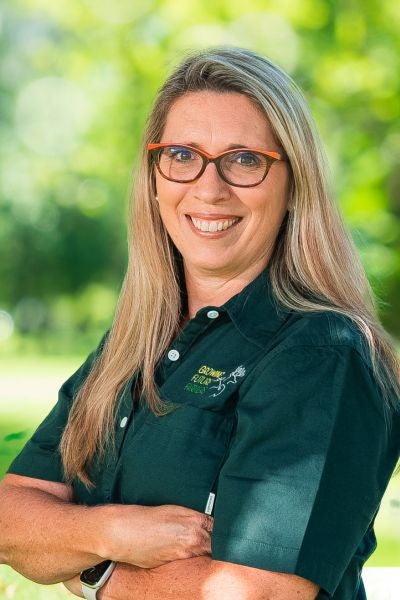
Wendy Paul
Chief Executive Officer of Plenty and co-founder of pioneering agritech venture fund Finistere Ventures.
Wendy Paul has more than 25 years’ experience across multinational organisations, joining Growing Future Farmers after 18 years with dairy co-operative Fonterra. During her time at Fonterra, she held senior roles spanning supply chain, customer services, sales, risk management, crisis response, governance, brand and reputation management, and organisational change, most recently serving as Director Culture and Wellbeing, where she led the reset of the co-op’s purpose and cultural transformation. She has held several board roles, including with the New Zealand Defence Force and Veterinaryfirst Limited, and also volunteers with Springboard Trust, supporting school principals with strategic planning.
But optimism alone will not carry this sector to 2050.
Without deliberate action now to build a co-ordinated approach to people, skills and leadership, that optimism risks becoming a moot point. The sector will not fall short because of climate, technology or global demand. It will fall short because it did not put the right systems in place to support the people who were ready to lead it.
Plenty of activity, little alignment
Today, New Zealand’s food and agriculture sector operates without a shared workforce strategy and without clear ownership of succession across farming, food science, innovation and leadership. Education providers, industry bodies and government agencies are all active but largely in parallel. There is widespread recognition of the challenge but no single point of accountability for solving it.
From the outside, the sector still appears robust. Export volumes remain strong, innovation continues in pockets and farmers keep producing. But beneath that surface activity sits a structural weakness. We are not deliberately developing the people system that will be required for the next generation of food production.
The opportunity ahead is real. Global demand for healthy, sustainably produced food continues to grow, and New Zealand is well placed to contribute. But the future of food will not be defined by volume alone. It will be shaped by value, by innovation and by our ability to connect food with health, sustainability and changing consumer expectations. None of that happens without capable people.
Across the country, there are individuals working on functional nutrition, new food formats and advanced production systems, while younger farmers are already thinking differently about environmental stewardship and animal welfare. New Zealand’s size allows ideas to be tested quickly and proof points to be built – but too often, those ideas struggle to scale.
One of the most accurate descriptions I have heard is that the plane is already flying. It just has no compass. Nobody is talking to each other, and no one is quite sure where we are heading.
I see this first-hand every day working alongside farmers, producers, researchers and students. Talented innovators develop concepts locally, push hard to make them work and then hit the limits of a slow, fragmented system. Eventually, many are picked up by larger overseas firms with deeper resources. When that happens, New Zealand does not just lose people. It loses momentum, experience and future leadership.
Innovation works – but scepticism persists
At farm level, the same pattern plays out. One Canterbury dairy farmer recently invested in camera technologies and wearable collar technologies for his herd. Initially, the technology only seemed to provide a break-even return, but it was not until collaboration with other farmers, development of people capability on farm and input from industry professionals that rapid and very profitable progress was achieved. The key point here is that technology, with the right people enabled, allows the farmer (and by default our industry) to spend less time anchored in the day-to-day menial tasks. That time and effort can then be put into strategies that drive productivity and profitability and provide work/life balance for our farmers.
His experience is not unusual. What is unusual is how slowly these proven innovations spread. Multiply that kind of gain across thousands of farms and the opportunity becomes obvious, but adoption remains cautious, incremental and dependent on who is willing to go first.
Short-term political cycles add to this uncertainty. Farmers are alternately praised as economic contributors or framed as environmental liabilities, depending on the mood of the day or the make-up of government. Obtaining any form of political consensus would help to reduce that volatility, thereby building confidence and encouraging long-term investment, precisely when the sector needs this stability to support succession and innovation.
One of the most accurate descriptions I have heard is that the plane is already flying. It just has no compass. Nobody is talking to each other, and no one is quite sure where we are heading. Alignment within the sector would address this problem.
Advocacy requires a unified voice across the various industry subsectors and competing priorities. Leadership groups need to recalibrate to better reflect the future rather than the past. Collaboration needs to move beyond discussion to a formal structure that creates shared momentum or accountability.
The missing piece of the puzzle
At the heart of all this is the need for a coherent talent pipeline. Succession is no longer automatic. Children are not necessarily taking over farms. Land is being sold or converted to forestry. Entry pathways are narrowing even as workforce shortages become more visible. In parts of the sector, hundreds of entry-level roles sit vacant, while only a small fraction of farms are actively willing to take young people on and invest in developing them. We talk about labour shortages – we are far less willing to talk about shared responsibility for growing capability.
Reliance on overseas labour further masks the problem. Migrant workers play an important role, but this approach addresses short-term gaps without building long-term continuity. It does not create future leaders, pathways to ownership or succession options.
By contrast, when young New Zealanders are mentored and supported, they become candidates for management, equity and long-term involvement. That distinction matters.
A sector that makes this pivot towards long-term labour solutions will be operationally robust by 2050.
To achieve this, what is needed is a deliberate, co-ordinated approach to developing people – one that treats talent as a strategic asset rather than an operational input.
When young people are immersed in real-world environments, supported by mentors and exposed to the full system around them, development accelerates. Confidence grows. Career trajectories change. These approaches already exist in pockets, but we need to do more to help them scale.
There is currently no single point of accountability for the future workforce of New Zealand’s food and agriculture sector. Without leadership and alignment, effort remains fragmented and progress uneven.
Turning optimism into action
Despite these challenges, my optimism remains.
The next generation is capable, values driven and open to collaboration. They are not waiting to be convinced that change is needed. The risk is that the system around them does not change fast enough.
If New Zealand wants a resilient, innovative food and agriculture sector in 2050, optimism must be matched with action – through clear pathways, co-ordinated leadership and sustained investment in people at every stage of the system.
Because the future will not organise itself.
And without deliberate action now, the promise of the next generation will remain just that: promise, unrealised.