
Posted on
22/09/2026For the New Zealand economy to flourish by 2050, we need the primary industries to succeed at scale.
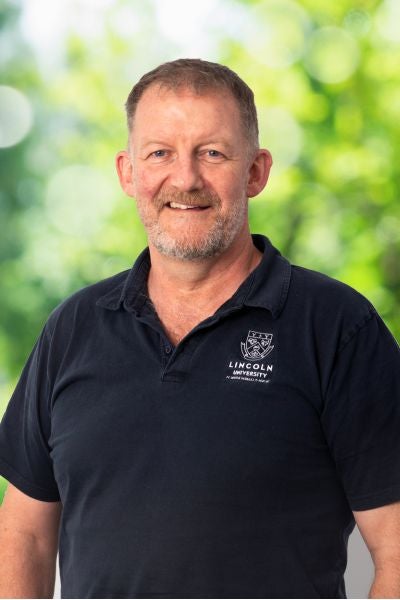
Hamish Gow
Sir Graeme Harrison Chair in Global Value Chains and Trade at Lincoln University.
Hamish Gow is the Sir Graeme Harrison Chair in Global Value Chains and Trade at Lincoln University. With over 30 years experience in food and agri roles in industry, government and academia, his special interests are the design of successful and enduring producer-led value chains into local, regional and international markets. He has founded programmes for building value chains, food innovation and food safety capacity in New Zealand, the Americas, Europe, Africa and Asia. This included leading the establishment of the Global Food Safety Partnership for the World Bank.
This will require us to drive massively increased productivity growth, not just expansion, in our big two sectors – dairy and kiwifruit. Concurrently, we will need to challenge our high-promise sectors such as aquaculture and temperate horticulture to embrace similar collaborative value chain design, innovation, marketing and regulations that have powered the success of dairy and kiwifruit at scale.
Over many years, I have seen the New Zealand collaborative approach at work on the world stage from the other side of the fence while serving with the World Bank, USAID, USDA and OECD.
Our track record as a country shows we’re highly successful when primary industry sectors come together to decide how we are going play cooperatively together and when they get government to legislate the right model.
Dairy and kiwifruit are our only value chains with robust scale and regulatory settings to ensure everyone along the whole chain plays together in the international marketplace.
To flourish in the future, we need to rebuild industrial-strength agriculture productivity for NZ Inc. and a talent pipeline focused on market access that delivers highly talented Kiwis with deep science but also trade and global market experience.
They’re the only value chains legislated to ensure that the excess economic market rents go back to the farmers thereby driving sustained on-farm economic returns, investment and regional growth in those two industries.
It also means that dairying and kiwifruit are the main drivers of land prices and capital gains, thereby masking a lack of sustained farm-level economic rents in other sectors such as arable, wine, vegetables and, until recently, red meat.
Our best talent rapidly rise to become leaders in industry, government and international agencies around the world. We need to enable our best talent to continue to get seats at the table so we can ensure a level playing field and impact beyond our size.
Three-legged stool
With these collaborative strengths in mind, we need to take a three-pronged approach on the road to a thriving 2050 – grow the two existing legs of the stool while actively finding and growing a new third leg.
For the first leg, we need to double down on our dairying strengths, especially since we’ve become reliant on more dairy conversions rather than genuine productivity gains of late. A sustainable, scalable, highly productive dairy ingredients business is non-negotiable. It needs to be world-class, top end. The future is getting right into it, because it’s out of the components of the milk that we can do this at scale, sustainably and with the highest quality.
We should be looking at how we can double milk production by increasing productivity through designing and adopting new farming systems and technology because dairy is the only industry that has continued to deliver economic wealth to New Zealand at scale over the past 40 years. It drives our exchange rate, our economic earnings power and our wealth creation in regional New Zealand and for the urban areas too.
As part of the dairy industry leg, we also need to invest in and build a world-class, scalable, low-carbon, sustainable, pastoral-based dairy beef industry that provides highly consistent manufactured beef. The shift is already beginning, but we need to accelerate it.
The second leg of the stool is that we need to invest, build and grow temperate horticulture beyond kiwifruit. As a country, we need to go hard in temperate plants, leveraging New Zealand’s natural advantages along with our disease-free status and expertise in breeding and cultivation.
There’s going to be an interesting play in plants. True scale in horticultural production will be difficult, but we can uniquely position ourselves in the temperate plant breeding nursery space. Everywhere else has real disease and geographical issues, while New Zealand has a unique Goldilocks temperate location. We should be trying to leverage this and then multiply it overseas. That takes capital investment, people coming together and a courageous government getting in behind it.
Finally, we need to add a new, third leg to the stool. This could be via aquaculture in our big blue backyard. Being, for the most part, land-lovers, we’ve missed the marine wealth right under our noses from an exclusive economic zone that’s some 15 times our existing landmass.
We haven’t even touched the sides on sorting out aquaculture. This could go in multiple different directions. Our biggest economic area is actually the seas around us. We lead the world in ocean fisheries management, but what about deep-sea fish farming?
This is a challenge that iwi-owned organisations are well equipped to lead. My hope is that iwi start working at how they can all play together and create one big company to co-invest and embrace the opportunities.
Back to the future
The co-operative instincts necessary for success need to be nurtured by political leaders along with reinvestment in some of our public good institutions that have been on the back burner since 1984.
For 40 years, we’ve dined off what was built before 1984. Many of our industry leaders and scientists trained back then are now retiring and leaving, and the ones since have been in a privatised world.
We don’t currently have the structured education, talent development and mentoring pathways required to go back to relationship-based international market development.
On my wish list is a much stronger engine for innovation and talent development to act as an honest broker and educator for the primary sector. As a super fan of the ‘land university’ model in the US and of Wageningen University in the Netherlands, I see a big need for genuinely neutral ‘honest brokers’ providing evidence-based education, extension and policy inputs for the industry and national good.
Taking back our superpower
New Zealand’s passionate embrace of the free market since 1984 has toughened us up and made us one of the most efficient and economically resilient producers in the world. But it’s been a tough nursery for sectors other than dairy and kiwifruit to strut their stuff. We are doing ourselves no favours by staying so committed to a non-intervention free market approach when our global competitors won’t hesitate to use their economic incentives and regulatory power to give entire industries a push in the right direction.
Land use change has driven most of our economic gains over the past decades, not productivity gains. To flourish in the future, we need to rebuild industrial-strength agriculture productivity for NZ Inc. and a talent pipeline focused on market access that delivers highly talented Kiwis with deep science but also trade and global market experience.
Only in this way will New Zealand be able to ensure that we secure a seat at the table and maintain market access as the world looks to redesign and rebuild the international rules-based system that is under geopolitical and economic pressure of late.
New Zealanders have a unique position in the world. We are a small country with limited power but seen as offering leaders who are smart, innovative, co-operative, trusted and focused on creating a fairer playing field for all. As such, we are often seen as the honest broker or intermediary. Our best talent rapidly rise to become leaders in industry, government and international agencies around the world. We need to enable our best talent to continue to get seats at the table so we can ensure a level playing field and impact beyond our size.
Want the full insights?
Download our Succession 2050: Gearing up for New Zealand's food and agri future white paper today.